
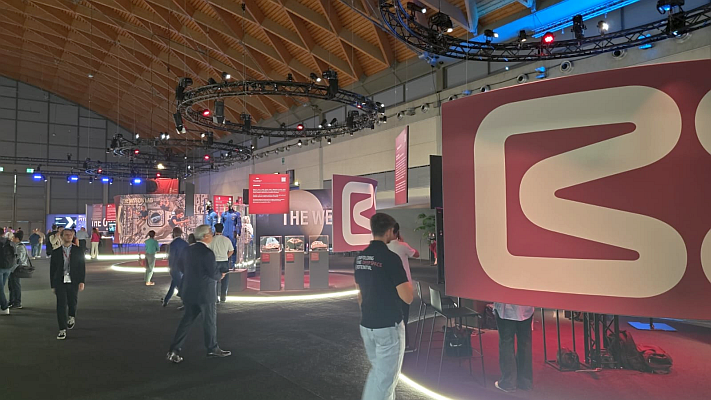
From September 23 to 25, the Italian Exhibition Group (IEG) hosted BEX – Beyond Exploration Expo at the Rimini Expo Centre in Italy. This new European platform focuses on the convergence of space technologies and industrial applications. MundoGEO was present at booth 086 in Hall C1, represented by its CEO, Emerson Granemann.
BEX aims to create new business opportunities by fostering dialogue among companies, institutions, startups, and research centers interested in diversification. The initiative highlights the space sector’s role as a driver of innovation and competitiveness, benefiting both the terrestrial economy and future activities beyond Earth.
Joining MundoGEO at BEX was a delegation comprising Marco Antonio Chamon, President of the Brazilian Space Agency (AEB), and his team; Rafael Mordente, CEO of Concert Space—one of the companies responsible for developing the Brazilian Micro-Launcher (MLBR); and Élison Montagner, Product and Services Manager at the Brazilian Aerospace Projects Company (ALADA), which was established to manage operations at the Alcântara Launch Center in Maranhão.
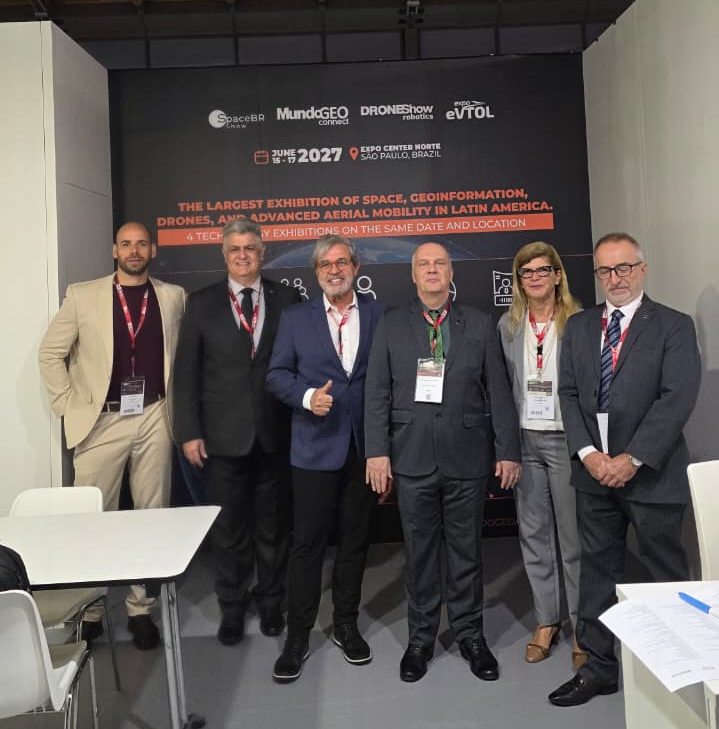
“MundoGEO’s participation in this fair in which we participated was fantastic. It had a great and innovative difference, as in addition to showing several companies in the sector, with their incredible advances in Earth Observation and Connectivity, it also showed ‘outside the box’ solutions and companies, which are discovering the space sector to develop their products and businesses, whether in the textile, food, health and well-being areas. Solutions for space exploration require many challenges to meet conditions in extreme environments, which can also create facilities for various situations here on Earth”,
Granemann commented.
This event transforms space-related ideas into real opportunities. Panels, workshops, and the exhibition area drive the development of space solutions, while B2B and B2G networking fosters investments and strategic connections. By integrating the space and non-space sectors, engaging with investors, and focusing on new talent, BEX aims to become Europe’s leading innovation hub.
“IEG brings to Italy a trend seen in global technology hubs: creating a forum for debate on key space-sector issues to attract public and private institutions, while opening up business and partnership opportunities for both established and emerging industry players. However, BEX goes a step further by taking a bold approach to the agenda, proposing topics that look toward a long-term horizon—one that, in the space sector, extends decades into the future”,
celebrated Rafael Mordente.
Élison Montagner added:
“I found the proposal to attract potential business opportunities from various countries via invitations very interesting, especially considering the event’s novelty. The trade show featured a diverse range of players from the space sector, which allowed for great flexibility in scheduling and conducting face-to-face meetings”.
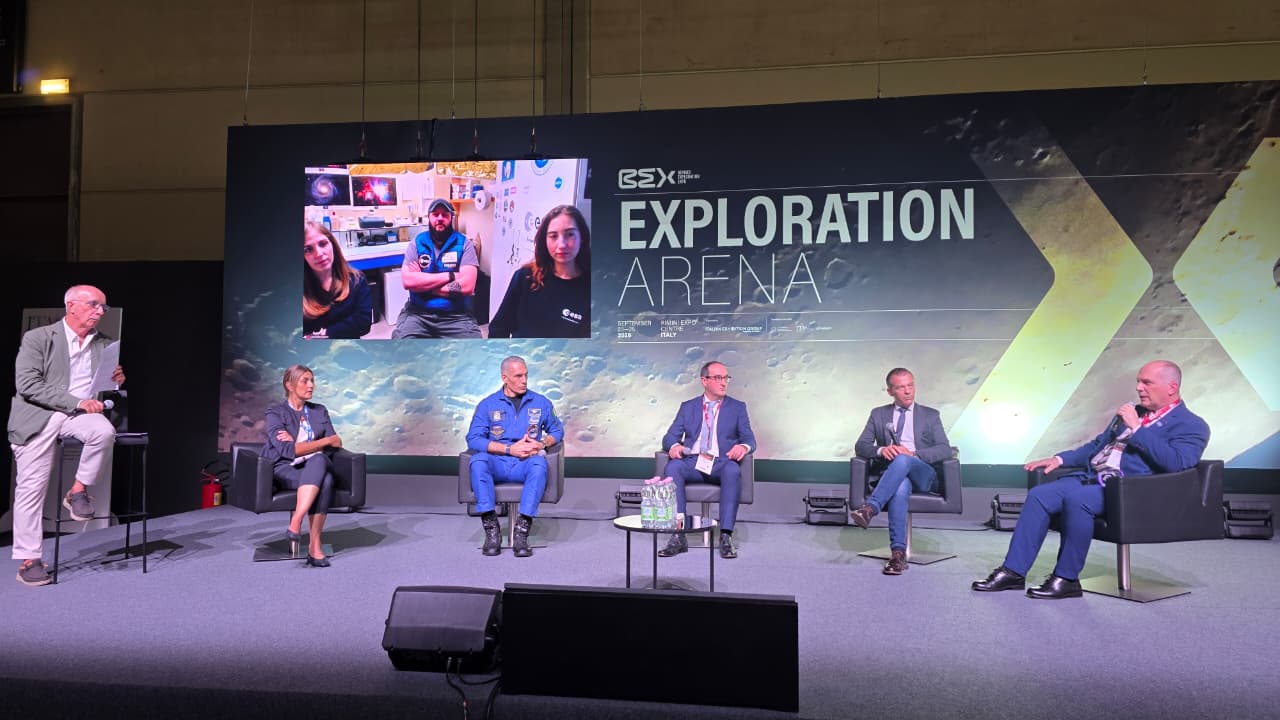
The space economy is poised to experience significant growth, expanding from a $613 billion industry in 2024 to $1.85 trillion in 2035.
“The number of satellites will rise from the current 17,000 to 60,000 by 2030, while launch costs will drop drastically from $54,500/kg to $2,720/kg by 2035. These figures highlight the rapid growth of the space economy”,
concludes Granemann.
One of the trip’s objectives was to foster connections between Brazil and Italy and to promote the SpaceBR Show 2027, which will be held from June 15 to 17 in São Paulo (SP) by MundoGEO, part of the IEG group. The plan is to feature a dedicated area for Italian companies at the São Paulo trade show and, at next year’s BEX, a similar space for Brazilian companies.
BEX 2026 Figures:
- 147 brands present
- 6,000 m² of exhibition space
- 3,500 participants
- 340 meetings held during the business matchmaking sessions
- 93 side events, including conferences, talks, and workshops
- 300 speakers
- 55 international journalists
More information: www.bex-expo.space/en