
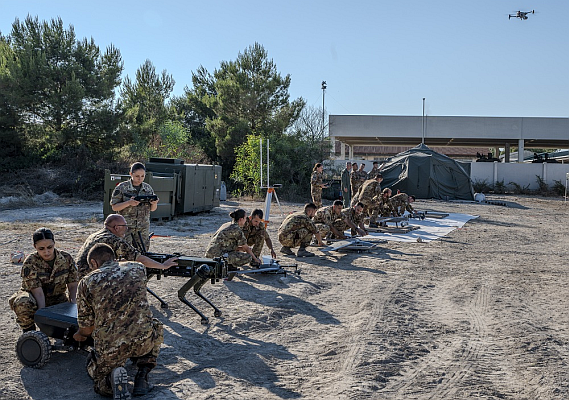
Information only creates value if it is delivered in time. In today’s military operations, operational advantage depends not only on the quality of sensors or the volume of data collected, but increasingly on the ability to transform that data rapidly into actionable intelligence for decision-makers.
This is the capability demonstrated by Planetek Italia and D-Orbit during the Task Force X Central Mediterranean initiative, where the focus was on compressing the entire information chain -from satellite data acquisition through to operational availability – by integrating space assets, artificial intelligence and command-and-control platforms.
Task Force X Central Mediterranean is the experimental initiative promoted by NATO Allied Command Transformation (ACT) and coordinated by the Italian Defence General Staff to validate the integration of innovative technologies in realistic operational environments.
Within this framework, Planetek Italia contributed to the integration of space-based capabilities with the operational systems employed during the exercise, providing expertise in the integration of sensors, platforms and heterogeneous systems, together with technical support for end users.
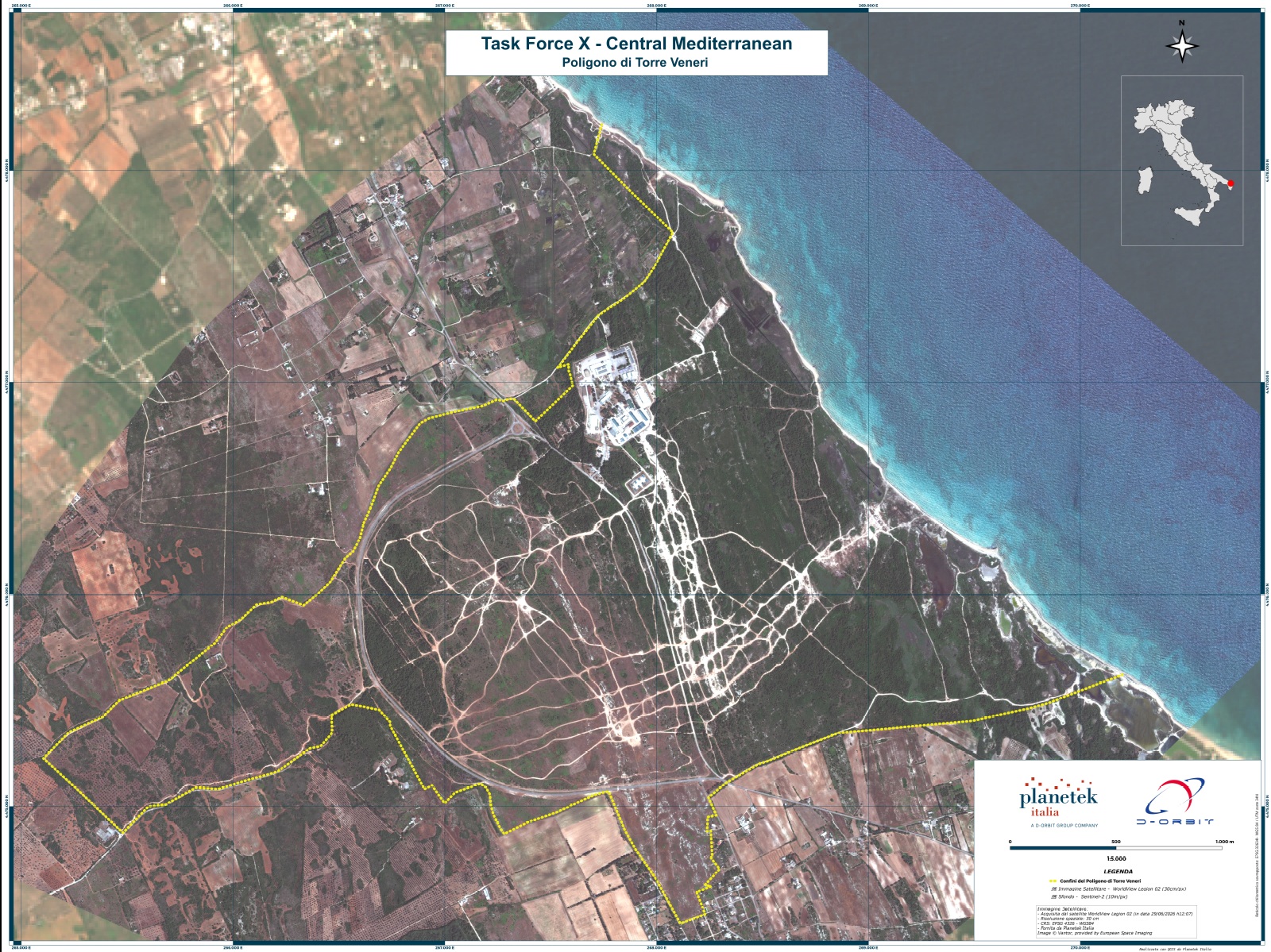
A practical demonstration of this approach was achieved through a Near Real-Time optical satellite acquisition, carried out in collaboration with European Space Imaging using a satellite from the WorldView Legion constellation. The image, acquired at 12:07 on 29 June, was made available to operators at 12:18, compressing the entire acquisition and delivery chain into just 11 minutes.
The most significant achievement, however, came immediately afterwards. Within only a few minutes of receiving the image, Planetek’s artificial intelligence algorithms automatically generated a thematic map of the area of interest, which was immediately distributed to forces deployed in the field. The demonstration showed that today’s challenge is no longer simply acquiring satellite imagery quickly, but transforming it almost in real time into operational intelligence capable of supporting tactical decision-making.
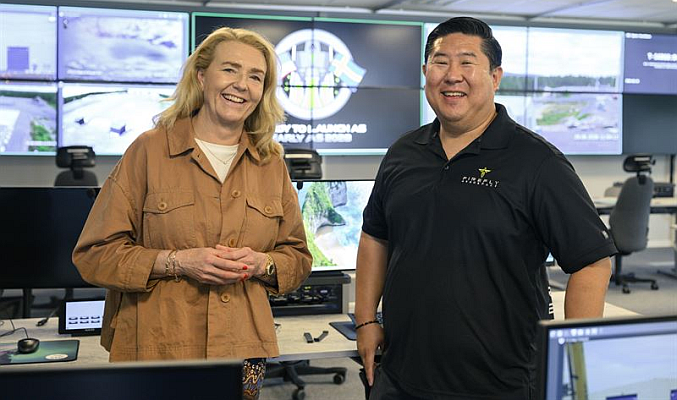
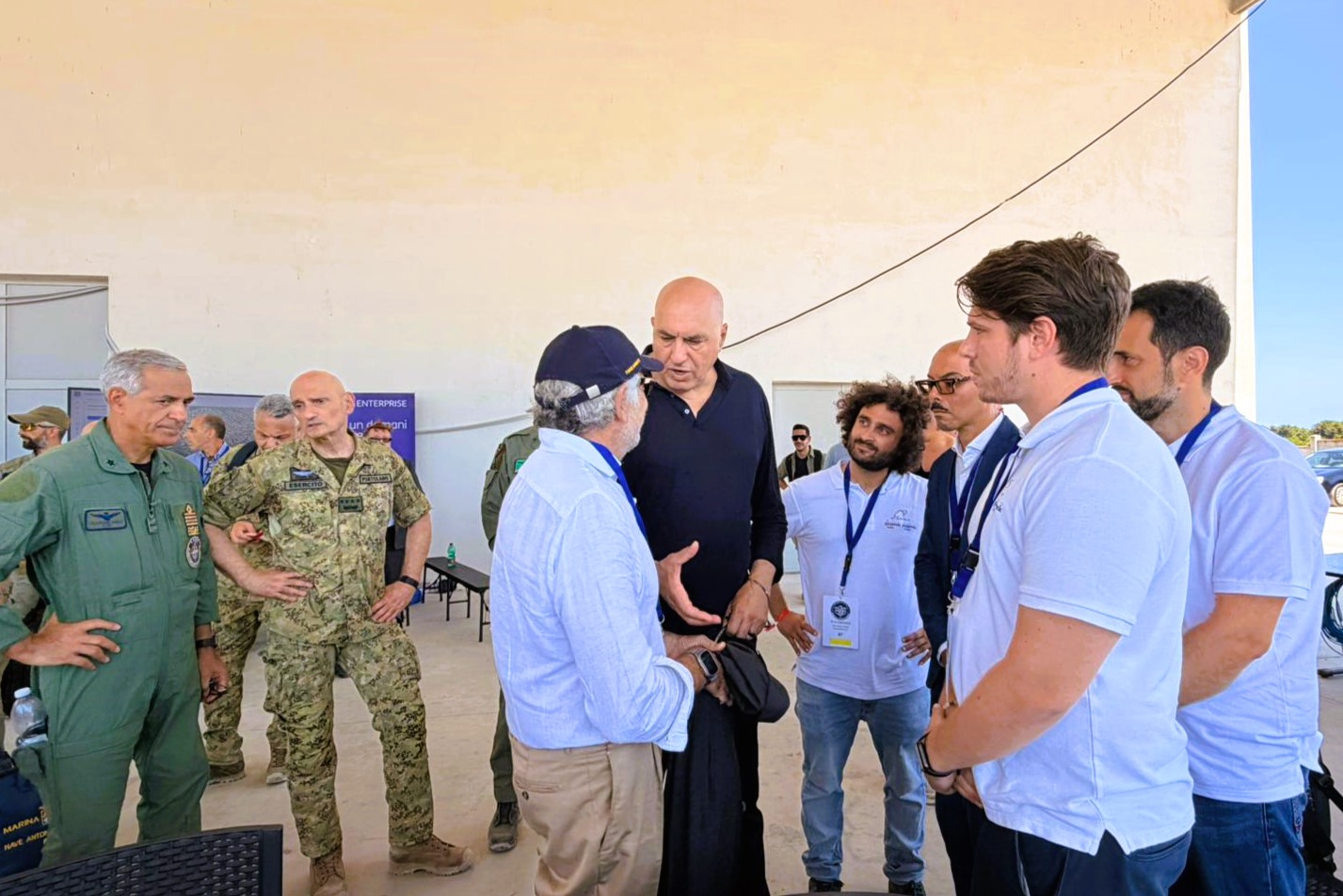
During the exercise, the solutions deployed by Planetek Italia and D-Orbit were also presented to the Italian Minister of Defence, Guido Crosetto, and the Chief of the Italian Defence General Staff, General Luciano Portolano, during their visit to the demonstration area.
“The successful integration of our capabilities within the Task Force X CentMed operational environment reinforces a conviction that has guided our strategy for many years: the true value of space lies not only in its ability to observe the Earth, but in its ability to make the information generated in space immediately usable. Today, operational advantage is measured by the time that separates observation from decision. Reducing that interval means increasing operational effectiveness. It was a privilege to present to Minister of Defence Guido Crosetto and Chief of Defence General Staff General Luciano Portolano the investment direction pursued by Planetek and D-Orbit, bringing together space capabilities, artificial intelligence and operational systems within a single low-latency information chain.” dichiara Giovanni Sylos Labini, CEO di Planetek Italia.
 The same vision underpins SpacedgeTM, the ecosystem developed by Planetek Italia and D-Orbit to bring actionable information even closer to decision-makers. By combining on-demand space services, low-latency processing and artificial intelligence algorithms executed directly in orbit, Spacedge™ is designed to progressively reduce the time required to move from observation to knowledge, enabling new operational concepts for the use of space infrastructure.
Another distinctive feature demonstrated during the exercise is the Space Awareness capability enabled by Spacedge™ services. The platform provides real-time visibility of which satellites are currently passing over a specific operational area, which sensors are available, and the time windows during which new acquisitions can be scheduled.
This information enables mission planners to dynamically coordinate the use of space assets throughout an operation, transforming the space segment into a fully integrated component of the operational decision cycle.
Built on interoperable standards, the Planetek Italia and D-Orbit solutions provide the integration layer between Earth Observation capabilities, space services, and Defence Command & Control (C2) and Battle Management Systems (BMS), allowing intelligence products and operational information to be seamlessly shared within existing defence architectures.
The demonstration also included the integration of data from multiple heterogeneous sources, including Near Real-Time SAR imagery from the Umbra constellation, additional satellite imagery provided by national assets, data collected by Involve Space’s stratospheric platforms, and other operational data sources. These information streams are correlated through artificial intelligence algorithms and integrated into a multi-domain Intelligence, Surveillance, and Reconnaissance (ISR) chain.
At the heart of this architecture is PRECISO® ISR, Planetek Italia’s software platform designed to collect, correlate and analyse data from satellites, geospatial sensors, unmanned platforms, stratospheric assets and video streams.
Powered by artificial intelligence, automated detection, object tracking and data fusion capabilities, the platform transforms heterogeneous data into alerts and intelligence products that are immediately available to operators. Built on interoperable standards, PRECISO® ISR integrates seamlessly with Command & Control (C2) and Battle Management Systems (BMS), enabling information to flow efficiently across operational environments.
The experience gained during Task Force X Central Mediterranean confirms a transformation that is becoming increasingly evident across the defence sector: operational advantage is no longer determined solely by access to more advanced sensors, but by the ability to integrate information across multiple domains and dramatically reduce the time required to convert complex data into actionable decisions.
In this evolving operational landscape, the integration of space capabilities, artificial intelligence and operational systems is emerging as one of the key enablers of information superiority, allowing commanders to respond faster, with greater awareness and increased operational effectiveness.
Source: Planetek