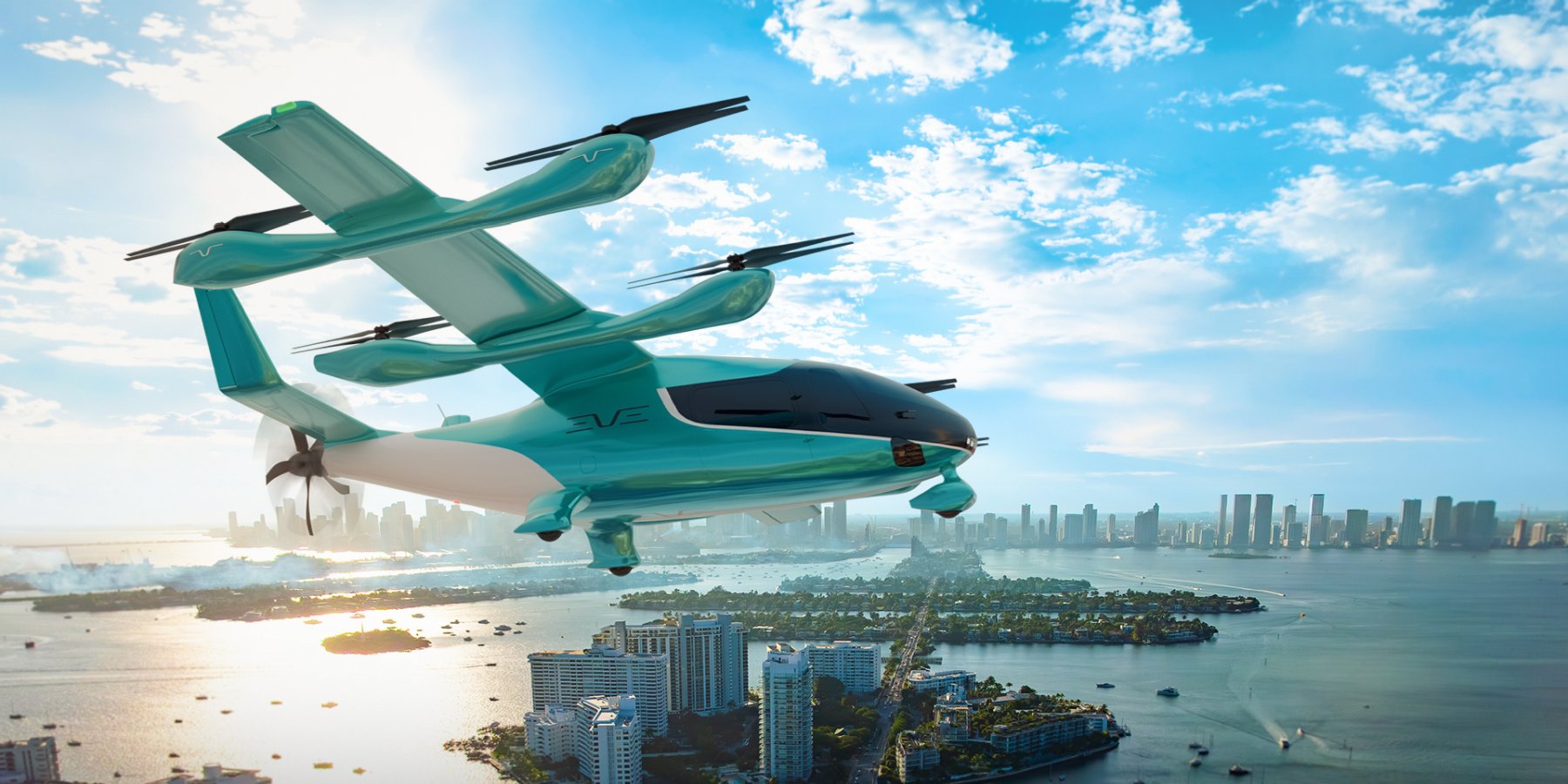



Eve Air Mobility welcomes the publication by Brazil’s National Civil Aviation Agency (ANAC) of the Proposed Noise Certification Criteria for Eve 100, the Company’s electric vertical take-off and landing (eVTOL) aircraft. The proposal is open for consultation until August 08 and represents a major step toward establishing the environmental certification framework for eVTOLs. The publication is a key milestone in the Eve 100 certification process and demonstrates continued progress toward type certification.
“ANAC’s publication of the proposed noise certification criteria is an important milestone in the development and certification of Eve 100,” said Johann Bordais, CEO at Eve. “We appreciate ANAC’s leadership and collaborative approach in developing a framework tailored to this emerging technology aircraft. This initiative supports the safe and responsible introduction of eVTOL operations for urban mobility while promoting international regulatory alignment.”
As the aviation industry introduces innovative technologies that differ from conventional aircraft, dedicated certification criteria are necessary to address the unique operational and acoustic characteristics of these vehicles. The proposed criteria are the result of extensive engagement between Eve and ANAC and draw on existing aviation noise regulations, adapting them to the specific characteristics of Eve 100 and its future operations.
The consultation also reflects broader international efforts led by aviation authorities and industry stakeholders to develop harmonized approaches to emerging technologies. Eve continues to actively participate in global regulatory discussions, helping support the development of future noise standards for advanced air mobility.
”Aircraft noise is a critical component of aviation environmental certification and an important factor in public acceptance of urban air mobility,” said Isabel Lima, Head of Noise and Vibration at Eve. “Noise certification establishes measurement methodologies and compliance criteria, ensuring that new aircraft are introduced with appropriate environmental protection and consideration for surrounding communities.”
As part of the certification process, the proposed criteria are intended to evaluate the acoustic characteristics of Eve 100 throughout phases of flight, supporting a comprehensive understanding of the aircraft’s environmental footprint before commercial operations begin.
Noise reduction has been a key consideration throughout the development of Eve’s eVTOL. Drawing on a lift-plus-cruise architecture, the aircraft has been designed to deliver a quieter experience than conventional helicopters. Eve’s approach to community acceptance is also supported by insights from its Visual & Sound Perception Study, conducted in collaboration with the Royal Netherlands Aerospace Centre (NLR). Using virtual reality and sound simulations, the study engaged more than 100 participants across New York, Orlando and San Francisco to better understand how communities perceive the sights and sounds of eVTOL operations in different urban and suburban settings. Alongside acoustic modeling assessments, engineering prototype flight testing continues to support Eve’s efforts to better understand and optimize Eve 100’s noise characteristics as the program advances.
Following completion of the consultation period, ANAC will review stakeholder contributions and continue work toward finalizing the applicable certification requirements. Eve continues to work closely with ANAC as the primary certification authority, while pursuing international validation activities that support the future global deployment of Eve 100.