


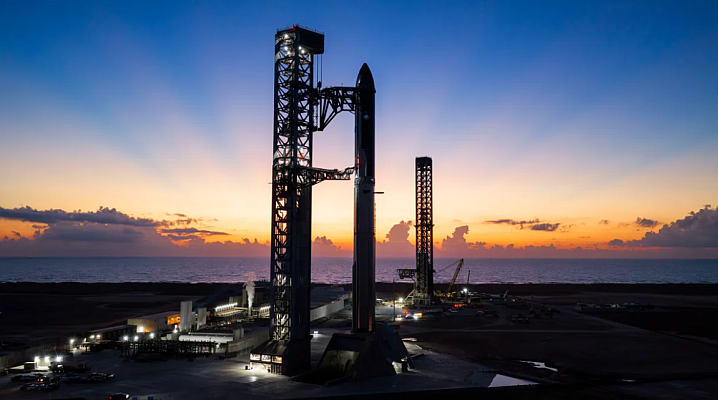
Last Monday (September 28), SpaceX conducted the first orbital flight of Starship, marking a new milestone in the development of the company’s largest launch system. “Flight 14” lifted off from Starbase, Texas, and—for the first time—carried the spacecraft onto an orbital trajectory, following 13 previous flights that had deliberately followed suborbital paths.
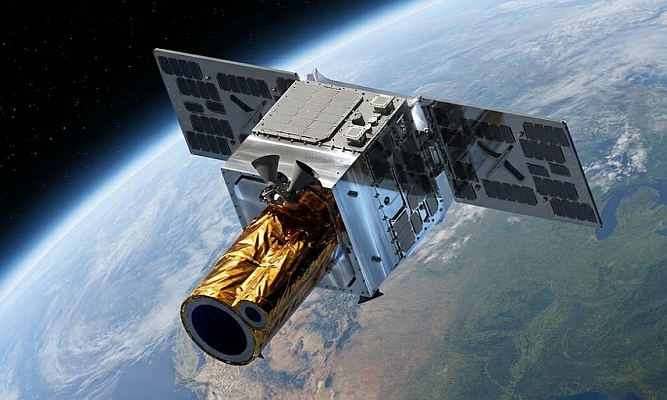
The mission also marked Starship’s operational debut. The vehicle placed 26 Starlink V3 satellites—the next generation of SpaceX’s internet constellation—into orbit. According to the company, these satellites were designed to significantly boost network capacity and speed.
Starship reached an orbit at an altitude of approximately 275 kilometers. However, during the ascent, one of the Raptor engines experienced an anomaly and was shut down. Despite this issue, the remaining systems allowed the spacecraft to continue the flight and achieve orbital insertion.
The original plan called for a mission lasting approximately ten hours and involving six orbits around Earth. After assessing the vehicle’s status, SpaceX decided to end the flight early. About three hours after launch, Starship performed reentry and concluded the mission with a splashdown in the Pacific Ocean, north of Hawaii. The Super Heavy booster also completed its return phase, executing a controlled splashdown in the Gulf of Mexico.
Flight 14 thus represents the first demonstration of Starship’s ability to reach orbit and carry an operational payload. This result marks a significant step in the system’s development as a high-capacity, reusable vehicle intended by SpaceX for satellite launch missions and, eventually, lunar operations and other space missions. Despite the progress, the mission also demonstrated that there are still technical hurdles to overcome before Starship operates routinely and is fully reusable.
Source: SpaceX